

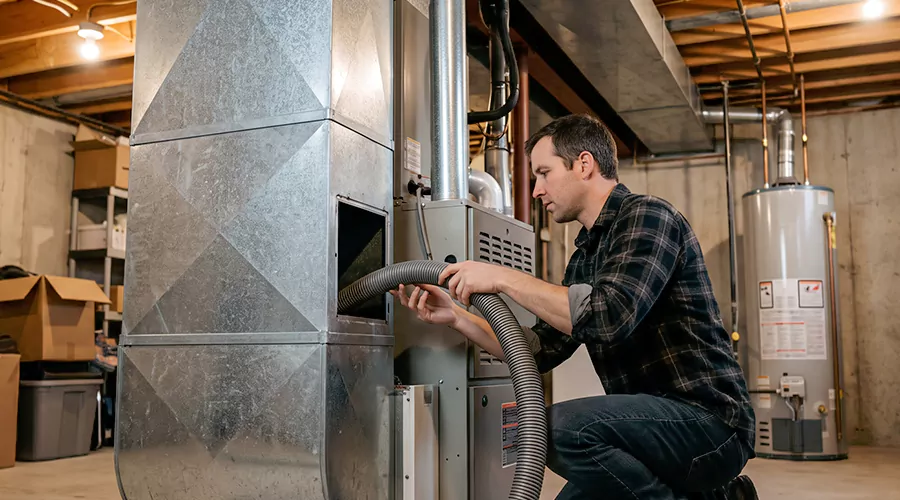
Furnace duct cleaning typically costs between $271 and $509 for many residential systems in the United States in 2026, with an average of approximately $390. More extensive whole-house duct cleaning can cost $450 to $1,000, particularly in larger homes or properties with multiple HVAC systems. The price depends on the number of supply and return ducts, their accessibility, and the cleaning work included.
Furnace ducts carry heated air throughout a home and return indoor air to the heating equipment. Over time, dust and debris can accumulate in these passages, especially when filters fit poorly or construction debris enters the system. However, ordinary settled dust does not automatically mean the ductwork needs professional cleaning. HVAC duct cleaning can help address accumulated debris when cleaning is necessary based on the condition of the ductwork.
The cost of cleaning furnace ducts is also different from the cost of cleaning the furnace itself. Duct cleaning focuses on the air distribution network, while furnace maintenance may include the blower, burners, heat exchanger inspection, and other equipment components. Some contractors combine these services, but others charge for them separately.
Understanding these differences helps homeowners compare estimates and avoid paying for work that does not address the actual problem.
What Is the Average Furnace Duct Cleaning Cost in 2026?
Furnace duct cleaning generally falls within the same pricing range as residential HVAC air duct cleaning. Angi's October 2026 cost data reports an average of approximately $390, with many projects ranging from $271 to $509. HomeGuide reports a broader $450 to $1,000 range for whole-house duct cleaning, reflecting differences in project size and cleaning scope.
A basic service may focus on the supply and return passages associated with one heating system. A more extensive project may involve main duct trunks, plenums, and affected air-handling components. The contractor should identify what is included before the homeowner accepts the estimate.
| Cleaning Service | Estimated 2026 U.S. Cost |
|---|---|
| Common residential furnace duct cleaning | 271–509 |
| Average residential duct cleaning | Approximately $390 |
| Broader whole-house duct cleaning | 450–1,000 |
| Furnace cleaning added to duct service | 60–150 in some published packages |
| More involved standalone furnace cleaning or maintenance | Approximately 70–400 |
| Duct video inspection add-on | 70–130 |
These are different service categories rather than charges that always apply together. A whole-system quote may already include some furnace-associated components, while another contractor may offer equipment maintenance as an add-on. The written scope is more useful than the service name alone.
Prices also vary with the location of the home and the number of heating systems. A property with separate upstairs and downstairs furnaces may require more work than one served by a single unit.
How Much Does Furnace Duct Cleaning Cost by House Size?
Some contractors estimate furnace duct cleaning using the home's square footage. Published residential duct-cleaning rates commonly range from approximately $0.15 to $0.40 per square foot, depending on the pricing source and scope. Larger homes often contain more duct branches, although floor area does not measure the actual length of the ductwork.
The following examples use a rate of $0.20 to $0.40 per square foot. These figures provide a planning estimate before the duct system has been inspected.
| Home Size | Illustrative Cleaning Cost |
|---|---|
| 1,000 square feet | 200–400 |
| 1,500 square feet | 300–600 |
| 2,000 square feet | 400–800 |
| 2,500 square feet | 500–1,000 |
| 3,000 square feet | 600–1,200 |
The calculations do not account for minimum service charges or separate HVAC systems. A 1,500-square-foot house with two furnaces could require more cleaning work than a 2,000-square-foot home with one accessible system. Contractors should therefore consider the equipment layout as well as the home's size.
These square-foot prices should not be added automatically to per-vent prices. They are usually alternative methods of estimating the same cleaning project.
How Much Does Furnace Duct Cleaning Cost per Vent?
Some companies calculate furnace duct cleaning costs by counting supply and return openings. Supply vent cleaning commonly costs $25 to $50 per opening under per-vent pricing. Larger return passages may be priced at approximately $40 to $75 each, although many contractors include returns in a whole-system rate.
For example, a home with 12 supply vents and two return grilles could have a calculated price of $380 to $750 using these ranges. The actual quote may differ because the main ductwork and equipment connections also require attention. A contractor might instead offer a flat price for the entire system.
Per-vent pricing becomes less useful when the duct layout is complicated. One large return may connect to a substantial passage, while several supply branches may be relatively short. A proper estimate should cover the connected ductwork rather than just the visible grille covers.
What Factors Affect Furnace Duct Cleaning Prices?
The total cleaning cost depends on the size and condition of the air distribution system. Accessibility, duct construction, and the amount of deposited material all influence the work required. Two homes with the same floor area can therefore receive substantially different estimates.
Number of Furnace Systems
Some homes have one furnace serving the entire property, while others use separate heating systems for different floors. Each independent system generally has its own supply and return passages. Cleaning multiple systems can require additional setup and labor.
The contractor should identify every furnace or air handler included in the quote. A price covering only the downstairs system may not include upstairs ducts. This should be explained before the cleaning begins.
Duct Material and Construction
Rigid sheet metal ducts can often be cleaned using controlled brushing and vacuum collection when the metal is sound. Flexible ducts and internally insulated passages require methods that protect their more delicate surfaces. Aggressive tools can tear a flexible liner or damage fiberglass insulation.
Damaged materials may need repair or replacement before cleaning. A cleaning quote should not be used to cover up an existing physical defect. The contractor should identify the duct materials during the initial inspection.
Duct Accessibility
Exposed ductwork in an unfinished basement is generally easier to reach than passages concealed above ceilings or behind finished walls. Some systems contain existing access points, while others require temporary service openings. Creating and restoring those openings can add time to the project.
The estimate should explain how the contractor will reach the main ducts and branches. Cleaning only through visible registers may not provide suitable access to every affected component. Any temporary openings should be sealed after the work is completed.
Amount of Dust and Debris
A light coating of ordinary household dust usually does not require extensive professional cleaning. However, substantial construction debris or material from a documented pest infestation can require additional work. Heavy deposits may take longer to loosen and remove.
The contractor should provide evidence of significant contamination before recommending a costly cleaning. Visible dust on a return grille does not establish that every connected duct contains excessive buildup.
Local Labor Rates
Cleaning prices vary between cities and regions. Contractors may use different crew sizes, equipment, and minimum service charges. A company using a fixed whole-system price may also calculate labor differently from one charging per vent.
Compare written estimates based on the same work. The lowest advertised price may exclude main ducts or furnace-associated components. A clear scope makes differences easier to evaluate.
What Does Professional Furnace Duct Cleaning Include?
Professional furnace duct cleaning normally involves removing appropriate deposits from the air distribution passages. A qualified contractor may use brushes or controlled air agitation tools to loosen material while vacuum equipment captures it. The method should prevent substantial dust from being released into occupied rooms.
A whole-system service may include supply and return branches, main trunks, registers, and plenums. Some packages also address affected blower or air handler components. However, equipment cleaning should not be assumed to be included unless the estimate says so.
A normal cleaning process may involve:
- Inspecting the system and identifying duct materials.
- Confirming which supply and return passages require cleaning.
- Protecting occupied spaces from disturbed debris.
- Connecting suitable vacuum collection equipment.
- Loosening and removing deposits from affected ducts.
- Cleaning registers and relevant accessible components.
- Restoring temporary access openings.
- Checking that the system operates normally afterward.
Cleaning should not damage duct liners or interfere with mechanical components. The contractor should also document existing defects, including loose connections and water-damaged insulation.
What Is the Difference Between Furnace Duct Cleaning and Furnace Cleaning?
Furnace duct cleaning and furnace cleaning address different parts of the heating system. The ducts distribute room air, while the furnace contains components that produce and move heat. A home may need furnace maintenance even when its ducts do not require cleaning.
A furnace service visit can involve checking electrical connections, inspecting the blower, evaluating burners on fuel-burning equipment, and checking heat exchanger and venting conditions. These tasks require qualified HVAC personnel. Ordinary duct cleaners should not dismantle combustion equipment unless trained and authorized to do so.
| Service | Main Work | Pricing Consideration |
|---|---|---|
| Furnace duct cleaning | Supply and return air passages | Commonly 271–509 for many residential projects |
| Whole-house duct cleaning | More extensive duct network | Often 450–1,000 |
| Furnace equipment cleaning | Selected furnace components | May be an add-on or separate service |
| Furnace maintenance | Operational and safety checks | Often priced as a service visit |
| Furnace repair | Correcting defective components | Separate diagnosis and estimate |
The terms may be combined in advertisements, so homeowners should ask exactly what will be completed. A contractor describing a furnace cleaning package may not include the ducts. Likewise, a duct-cleaning service may exclude the burners and other heating components.
Do Gas Furnace Ducts Cost More to Clean?
Gas furnace ducts do not automatically cost more to clean than ducts connected to electric heating equipment. The air distribution passages perform the same general function. Their cleaning cost depends mainly on the duct system's size, accessibility, and condition.
However, fuel-burning furnaces have additional equipment that requires appropriate safety maintenance. Gas connections, combustion chambers, heat exchangers, and exhaust flues are not ordinary air ducts. Inspection or servicing of these components may be a separate charge.
A contractor should distinguish room-air duct cleaning from combustion system work. The ordinary tools used to clean supply ducts should not be inserted into a furnace flue. A damaged combustion vent can create a carbon monoxide hazard and requires qualified service.
Does Furnace Duct Cleaning Include the Blower?
Blower cleaning may be included in some furnace duct cleaning packages, but it is not guaranteed. The blower moves air through the supply and return network, and dust may collect on its wheel or housing. The amount of cleaning needed depends on the equipment's condition.
A blower assembly may require specialized disassembly or electrical precautions. A qualified HVAC technician should handle work beyond ordinary accessible surfaces. The cleaning estimate should specify whether the blower wheel, housing, and associated cabinet areas are covered.
Cleaning a heavily contaminated blower can help address airflow problems in some circumstances. However, a malfunctioning blower motor or incorrect airflow setting requires a different diagnosis. Cleaning does not replace mechanical repair.
How Long Does Furnace Duct Cleaning Take?
A professional residential duct cleaning may take approximately three to eight hours, depending on the system and work scope. A larger home or one with multiple heating systems may require additional time. The cleaning process includes setup and restoring the equipment, not simply brushing individual vents.
A short appointment that only vacuums visible grilles should not be represented as complete furnace duct cleaning. Reaching the main supply and return passages requires suitable access and collection methods. The company should be able to explain how it intends to clean the agreed components.
Time alone does not establish quality. A straightforward system may be cleaned more quickly than a complicated one. Proper inspection and verification matter more than meeting a particular duration.
Is Furnace Duct Cleaning Worth the Money?
Furnace duct cleaning may be worth the cost when significant internal contamination is documented. The Environmental Protection Agency advises considering duct cleaning when substantial visible mold is present on appropriate hard surfaces, pests have infested the ducts, or excessive debris is being released from supply registers.
However, the EPA does not recommend routine cleaning simply because several years have passed. Research has not conclusively demonstrated that cleaning ordinary residential duct dust prevents health problems. The agency also notes that cleaning ducts alone has not been shown to consistently improve HVAC efficiency.
The decision should therefore be based on the actual condition of the system. A dusty return grille may need household cleaning rather than a professional whole-system service. A duct containing substantial renovation debris presents a different situation.
How Can You Avoid Unnecessary Furnace Duct Cleaning Charges?
A written estimate should describe the exact work being performed. This helps prevent confusion when a contractor offers separate prices for ducts, furnace components, and other services. An unusually low promotional rate may cover only a limited number of visible openings.
Before booking, ask:
- Does the quote include the entire supply and return duct network?
- How many furnace or HVAC systems are covered?
- Are main trunks and plenums included?
- Does the price cover the blower or furnace cabinet?
- What evidence shows that cleaning is necessary?
- Will vacuum collection be used to capture loosened debris?
- Are temporary access openings restored?
- What services could create additional charges?
Be cautious of companies that claim routine duct cleaning is required for every home or promise specific medical benefits. The EPA does not certify or endorse duct-cleaning businesses. Contractor qualifications and a clear cleaning method are more meaningful than official-sounding claims.
How Often Should Furnace Ducts Be Cleaned?
There is no universal requirement to clean furnace ducts every year or every three years. The EPA recommends cleaning as needed based on documented contamination. Some homes may require attention after a major renovation or pest problem, while others may not need professional cleaning for many years.
Furnace maintenance should follow a separate schedule. Filters need checking and replacement according to the equipment manufacturer's instructions, and fuel-burning equipment should receive appropriate seasonal safety service. These tasks support normal operation whether or not the ducts are cleaned.
A homeowner should investigate unusual dust or debris rather than automatically schedule repeated cleaning. Correcting damaged return connections and keeping moisture out of the system can reduce future contamination.
How Can You Reduce Furnace Duct Cleaning Expenses?
The most useful preventive measures involve controlling dust and keeping the duct system in good condition. A properly fitted filter helps reduce particles reaching downstream components. Replacing a heavily loaded filter also helps prevent unnecessary airflow restrictions.
Vacuum supply and return grilles during ordinary housekeeping. Protect exposed ducts from construction debris and correct return-side leaks that draw air from dusty unfinished spaces. These steps can reduce the amount of material accumulating in the system.
Moisture control is equally important. Wet insulation and recurring condensation may require repairs or replacement rather than repeated cleaning. Addressing the source of a problem can be more economical than paying for another service after contamination returns.
Conclusion
Furnace duct cleaning commonly costs $271 to $509 in 2026, with an average near $390 for many residential projects. More extensive whole-house cleaning may cost $450 to $1,000. The price depends on system size and the components included, not simply the number of rooms. Furnace equipment maintenance is a separate service that may be bundled with duct cleaning. Before scheduling, request evidence that the ducts need cleaning and compare written estimates covering the same work.